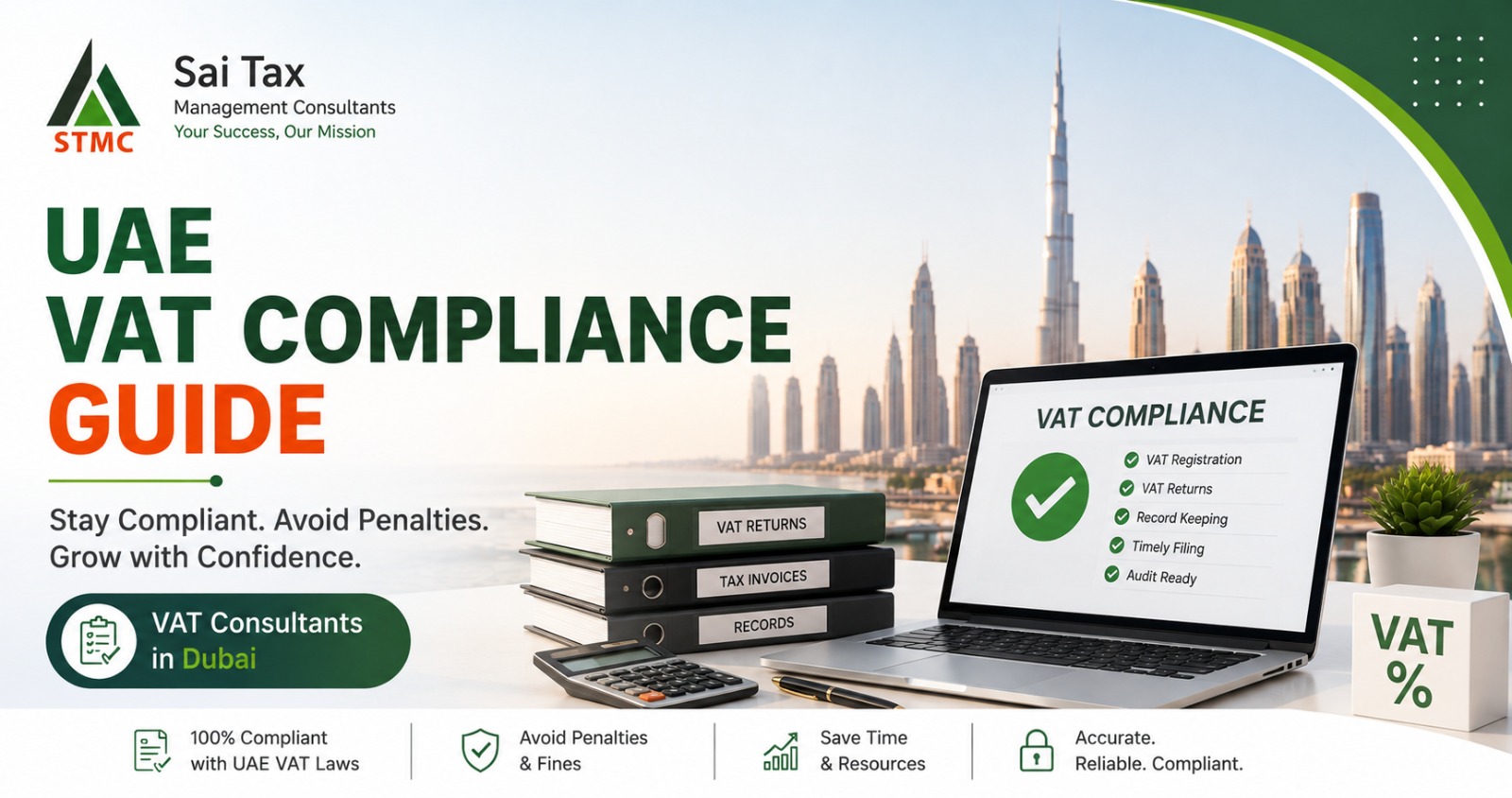
UAE VAT is a consumption tax charged at the standard rate of 5% on most taxable supplies of goods and services. Businesses that meet the mandatory registration threshold of AED 375,000 in taxable supplies must register for VAT, charge VAT where applicable, maintain proper records and file VAT returns with the Federal Tax Authority (FTA).
Value Added Tax, commonly known as VAT, is an important part of the UAE's tax system. Since its introduction in 2018, VAT has become a routine compliance responsibility for businesses selling goods and services in the UAE.
However, VAT is not simply about adding 5% to an invoice. Businesses need to understand when VAT applies, when registration is required, how input and output VAT work, when returns must be filed and how records should be maintained.
For companies operating in Dubai, professional guidance from experienced VAT Consultants in Dubai can help simplify registration, filing, compliance and VAT planning.
This guide explains how UAE VAT works, who needs to register, how VAT is calculated and what businesses should do to remain compliant.
VAT is an indirect tax imposed on the consumption or use of goods and services.
In the UAE, VAT was introduced on 1 January 2018 at a standard rate of 5%. It is generally collected by businesses at different stages of the supply chain, while the final economic burden is ultimately borne by the consumer.
For example, when a business sells a taxable product for AED 1,000, it may charge 5% VAT, making the customer's total invoice value AED 1,050, assuming the supply is standard-rated and no other VAT treatment applies.
The business collects the VAT from its customer and accounts for it to the FTA after considering eligible input VAT.
Businesses can refer to the Federal Tax Authority's official VAT resources for current legislation, guides and compliance information.
The UAE VAT system works through a mechanism known as output VAT and input VAT.
Output VAT is the VAT a registered business charges its customers on taxable supplies.
For example:
Product or service value: AED 10,000
VAT at 5%: AED 500
Total invoice: AED 10,500
The AED 500 collected is output VAT.
Input VAT is the VAT a business pays when purchasing goods or services for business purposes.
For example, if the business purchases equipment for AED 4,000 plus AED 200 VAT, the AED 200 may qualify as recoverable input VAT if the relevant UAE VAT requirements are satisfied.
At the end of a VAT return period, the business generally calculates the difference between eligible output VAT and recoverable input VAT.
VAT payable = Output VAT − Recoverable Input VAT
If output VAT is higher than recoverable input VAT, the business generally pays the difference to the FTA.
If recoverable input VAT exceeds output VAT, the business may have a VAT credit that can potentially be recovered or carried forward, subject to the applicable rules.
The standard UAE VAT rate is 5%.
However, not every transaction is automatically subject to 5% VAT.
UAE VAT treatment generally falls into categories such as:
These are supplies subject to the standard 5% VAT rate.
Many ordinary goods and services fall under this category.
Certain supplies are subject to 0% VAT.
Examples can include specific qualifying exports and certain supplies in sectors such as healthcare, education and real estate, subject to the conditions established under UAE VAT legislation.
A zero-rated supply is still a taxable supply, which is an important distinction for VAT-registered businesses.
Certain goods and services are exempt from VAT.
Examples may include specific financial services, residential property transactions in certain circumstances and bare land, subject to the applicable legislation.
The difference between zero-rated and exempt supplies is important because the VAT recovery treatment can differ.
Businesses should therefore classify transactions correctly instead of treating all non-5% transactions in the same way.
VAT registration can be either mandatory or voluntary, depending on the value of taxable supplies and relevant circumstances.
A business generally must register for VAT when the value of its taxable supplies and imports exceeds the mandatory registration threshold of:
AED 375,000
The FTA states that businesses are required to register when the value of taxable supplies and imports exceeds the mandatory threshold, subject to the applicable rules.
A business may generally apply for voluntary VAT registration when the value of taxable supplies, imports or relevant taxable expenses exceeds:
AED 187,500
Voluntary registration can be useful for eligible businesses that want to recover input VAT and operate within the VAT system.
Businesses should assess their individual circumstances before deciding whether voluntary registration is appropriate.
If you are unsure whether your business needs to register, professional VAT registration and compliance support from Sai Tax Management Consultants can help you understand your obligations.
A VAT-registered business is an entity that has registered with the Federal Tax Authority and received a Tax Registration Number (TRN).
Once registered, the business generally needs to:
Charge VAT on applicable taxable supplies
Issue compliant tax invoices
Maintain appropriate VAT records
Track input and output VAT
File VAT returns
Pay VAT due within the applicable deadline
Maintain supporting documentation
VAT registration therefore creates ongoing compliance responsibilities rather than being a one-time administrative process.
VAT-registered businesses are required to submit VAT returns according to their assigned tax period.
For many businesses, VAT returns are filed quarterly, although the FTA may assign a different tax period depending on the circumstances.
A VAT return generally reports information such as:
Taxable supplies
Output VAT
Recoverable input VAT
Adjustments
VAT payable or refundable
Businesses should check their FTA account for their specific VAT return period and filing deadline.
A tax invoice is an official document issued by a VAT-registered business for taxable supplies.
A compliant tax invoice generally includes relevant details such as:
Supplier name
Supplier address
TRN
Customer information where required
Invoice number
Invoice date
Description of goods or services
Quantity or value
VAT rate
VAT amount
Total amount payable
Businesses should ensure that their invoicing systems generate invoices that comply with UAE VAT requirements.
Incorrect or incomplete invoices can create difficulties when businesses attempt to recover input VAT or during an FTA review.
One of the key benefits of VAT registration for eligible businesses is the ability to recover certain input VAT incurred on business expenses.
However, not every expense automatically qualifies for recovery.
Generally, the expense should be connected to making taxable supplies and the business should have appropriate supporting documentation, such as a valid tax invoice.
Certain restrictions apply to specific expenses and circumstances.
Businesses should therefore maintain clear documentation showing:
What was purchased
Who supplied it
The VAT charged
How the expense relates to business activities
Whether the input VAT is recoverable under UAE VAT legislation
This is an area where professional advice from VAT Consultants in Dubai can help businesses reduce errors and improve VAT compliance.
Proper record keeping is an essential part of UAE VAT compliance.
Businesses should maintain relevant records, including:
Tax invoices
Credit notes
Purchase invoices
Sales records
Import and export documents
VAT return information
Accounting records
Supporting payment documentation
Records of taxable, zero-rated and exempt supplies
The records should be maintained in accordance with the UAE's applicable record-keeping requirements.
Good documentation can make VAT return preparation easier and provide supporting evidence if the business is subject to an FTA review.
VAT errors can occur for many reasons, including:
Incorrect VAT rates
Missing tax invoices
Incorrect input VAT claims
Late VAT registration
Incorrect transaction classification
Late VAT return filing
Incorrect VAT calculations
Businesses should review and correct errors as soon as they are identified.
Depending on the nature of the error and the applicable rules, a business may need to make a voluntary disclosure or take another corrective action.
Because VAT penalties and correction procedures can depend on the specific circumstances, businesses should obtain professional advice rather than assuming that every mistake can be corrected in the same way.
Managing VAT becomes more complex as a business grows.
Experienced VAT Consultants in Dubai can help businesses with:
VAT registration
VAT deregistration
VAT return preparation
VAT filing
Input VAT review
Output VAT reconciliation
Tax invoice compliance
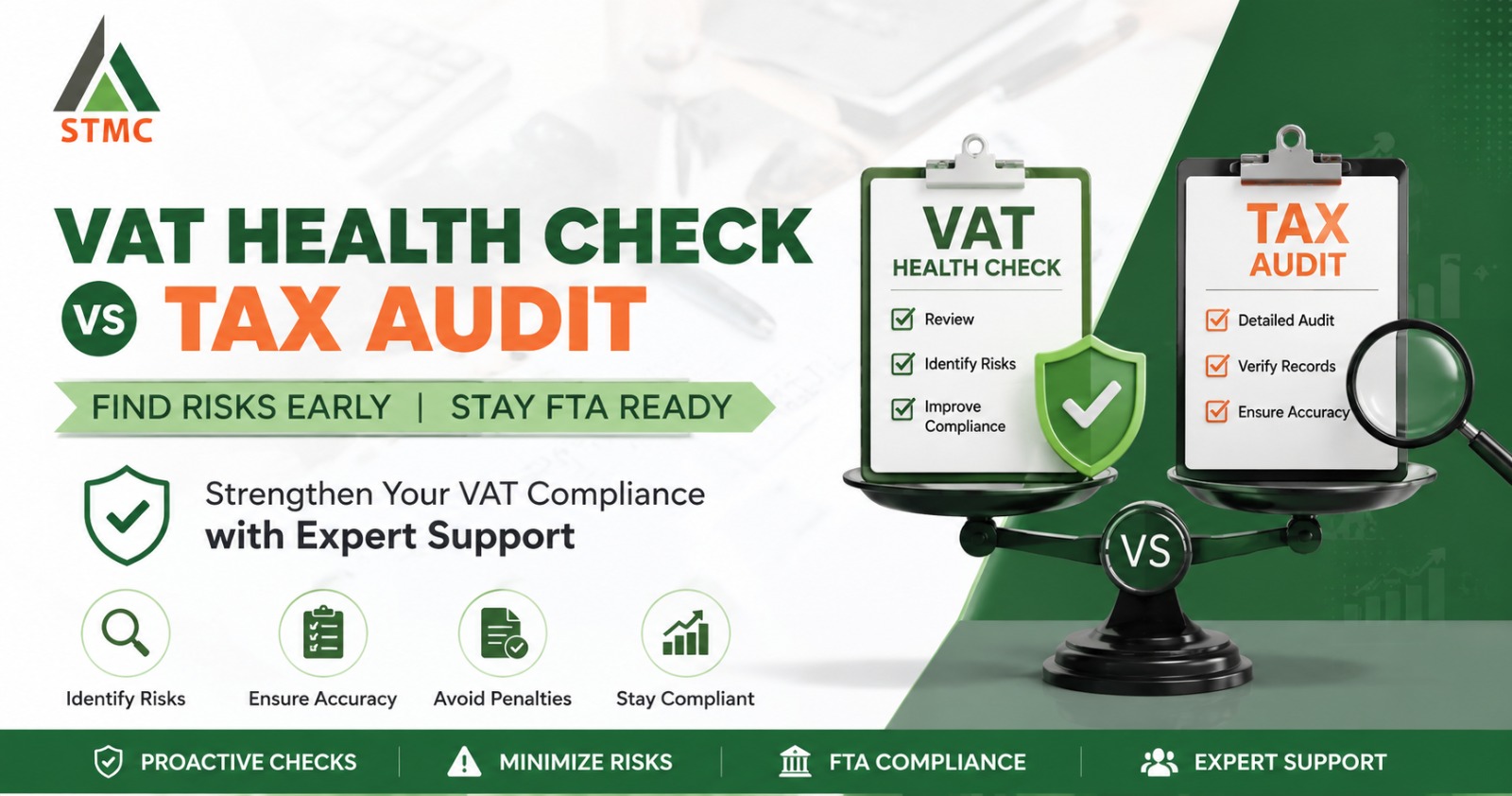
VAT health checks
VAT advisory
Voluntary disclosures
FTA correspondence
VAT audit support
Sai Tax Management Consultants provides tax and accounting services designed to help UAE businesses manage their regulatory responsibilities.
You can also explore Corporate Tax Consultants in Dubai if your business needs assistance managing VAT alongside UAE Corporate Tax obligations.
For businesses that want to understand the wider role of professional tax support, the guide to UAE tax consultants provides additional information.
Businesses can reduce compliance risks by avoiding common mistakes such as:
Businesses approaching AED 375,000 in taxable supplies should monitor their turnover carefully.
Some transactions may be zero-rated, exempt or subject to specific rules.
Businesses should retain appropriate supporting documentation before claiming recoverable input VAT.
Late filing or payment can result in penalties and unnecessary compliance issues.
Incomplete records can make VAT reconciliation and FTA reviews more difficult.
Businesses should maintain clear separation between personal and business expenditure and carefully assess whether input VAT is recoverable.
New products, services, markets or international transactions can change the VAT treatment of supplies.
Regular VAT reviews can help businesses identify potential issues before they become costly.
Use this checklist to assess your business's VAT readiness:
Determine whether VAT registration is mandatory or voluntary
Monitor taxable turnover
Obtain and maintain a valid TRN
Issue compliant tax invoices
Correctly classify taxable, zero-rated and exempt supplies
Track output VAT
Track eligible input VAT
Maintain supporting tax invoices
Reconcile VAT with accounting records
File VAT returns on time
Pay VAT liabilities by the applicable deadline
Review VAT treatment when introducing new products or services
Maintain proper VAT records
Seek professional advice when complex transactions arise
The standard UAE VAT rate is 5%. However, certain supplies may be zero-rated or exempt, depending on the nature of the transaction and the applicable VAT legislation.
The mandatory VAT registration threshold is generally AED 375,000 in taxable supplies and imports. The voluntary registration threshold is generally AED 187,500, subject to the applicable rules.
Eligible VAT-registered businesses can generally recover input VAT related to taxable business activities, provided the relevant requirements are satisfied and appropriate supporting documentation is maintained.
VAT return periods are assigned by the FTA. Many businesses have quarterly VAT return periods, but businesses should check their FTA account for their specific filing period and deadline.
Professional VAT Consultants in Dubai can be particularly useful for businesses that need help with VAT registration, return filing, input VAT recovery, complex transaction treatment, voluntary disclosures or FTA-related matters.
Understanding how VAT works in the UAE is essential for businesses of every size.
The standard VAT rate is 5%, but compliance involves much more than adding VAT to customer invoices. Businesses must understand registration requirements, correctly classify transactions, manage input and output VAT, maintain proper records and submit accurate VAT returns on time.
As businesses expand, VAT obligations can become increasingly complex, particularly when they deal with imports, exports, multiple entities, exempt supplies or international transactions.
Working with experienced VAT Consultants in Dubai can help businesses manage these responsibilities more efficiently and reduce the risk of avoidable compliance errors.
Sai Tax Management Consultants helps businesses across Dubai and the UAE manage VAT registration, VAT returns, compliance, advisory and tax-related requirements.
Whether you are registering for VAT for the first time, reviewing your existing VAT process or preparing for an FTA-related issue, professional guidance can help you make informed decisions.
Don't let VAT compliance become a last-minute problem. Get your VAT obligations reviewed by experienced professionals.
Disclaimer: UAE VAT legislation, FTA guidance, thresholds, filing requirements and administrative procedures may be updated from time to time. This article is intended for general informational purposes and should not be considered legal or tax advice. Businesses should consult the latest FTA guidance or obtain professional tax advice for their specific circumstances.