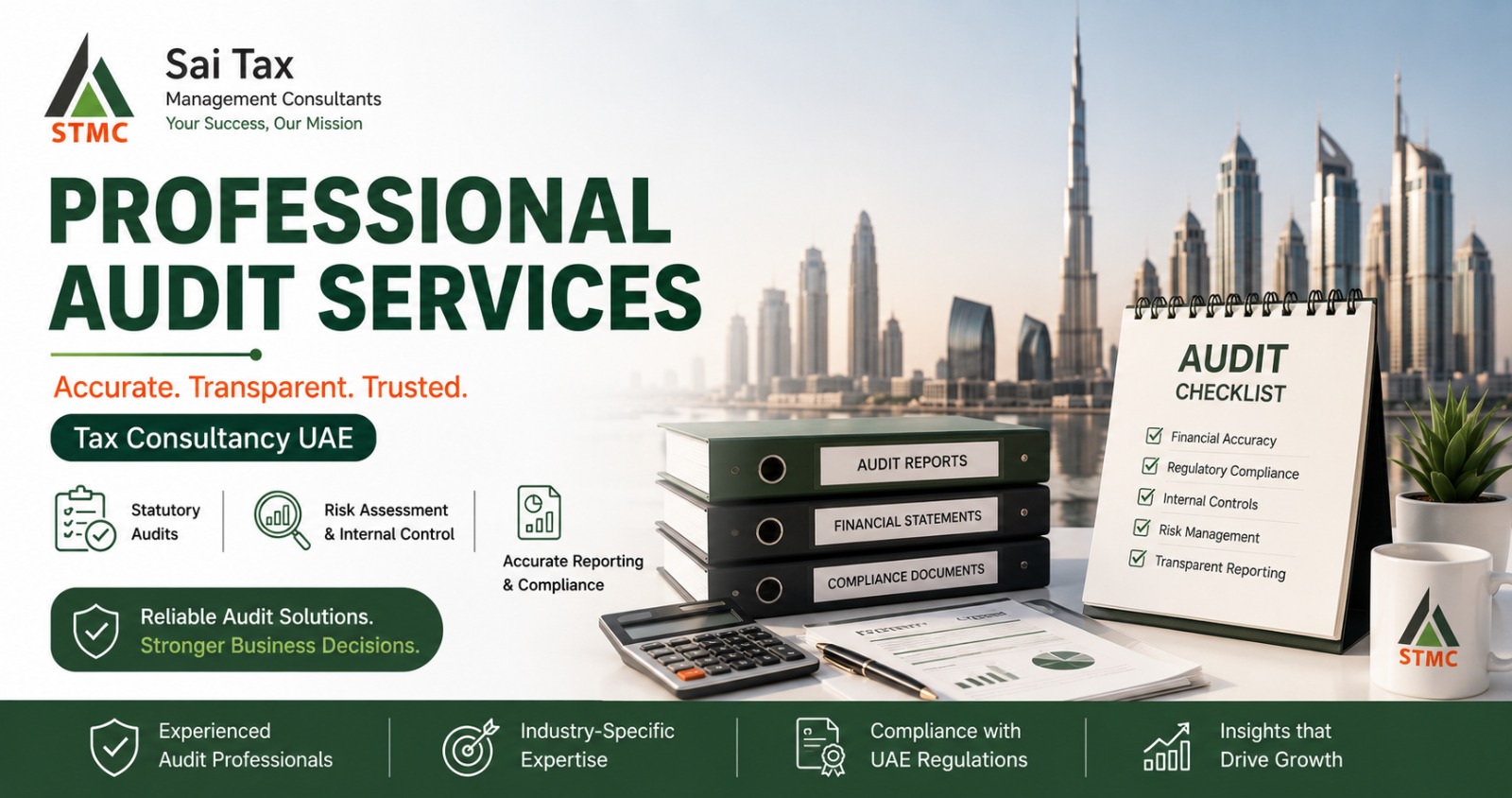
Professional audit services in the UAE help companies independently examine their financial records, accounting systems and financial statements to improve accuracy, transparency and compliance. Audits can also support Corporate Tax compliance, financial decision-making, investor confidence and regulatory requirements. However, not every UAE company is automatically required to maintain audited financial statements for Corporate Tax purposes. The Federal Tax Authority specifies that certain categories, including Taxable Persons with revenue exceeding AED 50 million and Qualifying Free Zone Persons, are required to prepare and maintain audited financial statements for Corporate Tax purposes.
As businesses in the UAE continue to operate in an increasingly regulated financial environment, maintaining accurate financial records is more important than ever.
An audit provides an independent review of a company's financial information and can help identify inconsistencies, control weaknesses and accounting issues before they become larger problems.
For companies managing UAE Corporate Tax, VAT, accounting and financial reporting obligations, professional audit services can also form an important part of an effective compliance strategy.
Businesses looking for support across accounting and tax matters can also consider professional Tax Consultancy UAE services to coordinate their financial and tax compliance requirements.
Professional audit services involve an independent examination of a company's financial records, transactions, accounting systems and financial statements.
The objective is to determine whether the financial statements provide a reliable representation of the company's financial position and whether they have been prepared in accordance with the applicable accounting framework.
An audit may involve reviewing:
Revenue and sales records
Expenses and purchases
Bank transactions
Assets and liabilities
Accounts receivable
Accounts payable
Inventory
Payroll records
Related-party transactions
Accounting policies
Financial statements
Supporting documentation
The UAE's auditing profession is regulated under Federal Decree-Law No. 41 of 2023, which covers the regulation of the accounting and auditing profession and the services provided by practitioners.
No. Not every company is automatically required to have audited financial statements for UAE Corporate Tax purposes.
The Federal Tax Authority confirms that only categories specified under the relevant Ministerial Decision are required to prepare and maintain audited or certified financial statements for Corporate Tax purposes.
For example, under the current Corporate Tax requirements, Taxable Persons deriving revenue exceeding AED 50 million during the relevant Tax Period and all Qualifying Free Zone Persons are required to prepare and maintain audited financial statements for Corporate Tax purposes.
However, separate requirements may apply under company law, licensing authority rules, free zone regulations, financing arrangements or other sector-specific regulations.
Therefore, companies should not assume that the Corporate Tax audit requirement is the only consideration.
A professional review can help determine which financial reporting and audit requirements apply to a specific business.
An audit can provide much more value than simply satisfying a regulatory requirement.
An independent review can identify errors, inconsistencies and unusual transactions in financial records.
This gives management greater confidence in the numbers used for business decisions.
Auditors can identify weaknesses in processes such as:
Cash handling
Purchase approvals
Expense management
Inventory controls
Payment authorization
Revenue recognition
Identifying these weaknesses can help companies improve their internal financial controls.
Accurate financial statements are important when calculating taxable income.
The FTA states that taxpayers are expected to prepare and maintain financial statements and supporting records for Corporate Tax purposes.
The FTA also emphasizes that businesses must retain records and documentation supporting information reported in their Corporate Tax returns.
This makes strong accounting and audit processes particularly valuable for companies operating under the UAE Corporate Tax regime.
Investors, shareholders and business partners often want reliable financial information before making important decisions.
An independent audit can provide greater confidence in the financial information presented by a company.
An audit can highlight areas where a company may face financial or operational risks.
Management can then take corrective action before those issues become more serious.
Although the exact process depends on the company's size, industry and financial structure, a professional audit generally follows several stages.
The auditor first develops an understanding of the company's business model, operations, accounting systems and financial processes.
The auditor examines relevant accounting records and supporting documents.
These may include invoices, contracts, bank statements, payroll records and transaction reports.
The auditor evaluates important financial controls and identifies areas that may require additional testing.
Selected transactions and account balances may be tested to determine whether they are properly recorded and supported.
The auditor reviews the financial statements and considers whether they have been prepared in accordance with the applicable accounting standards.
For UAE Corporate Tax purposes, the FTA states that financial statements should generally be prepared using accounting standards accepted in the UAE, with IFRS being the most frequently used framework.
After completing the audit procedures, the independent auditor issues an audit report containing the relevant audit opinion.
Businesses should maintain organized financial records throughout the year rather than trying to collect everything immediately before an audit.
Commonly requested documents may include:
Trial balance
General ledger
Balance sheet
Profit and loss statement
Bank statements
Sales invoices
Purchase invoices
Expense records
Payroll records
Fixed asset register
Inventory records
Loan agreements
Lease agreements
Customer and supplier balances
VAT records
Corporate Tax information
Related-party transaction details
Supporting contracts
The FTA emphasizes that businesses must maintain records supporting their Corporate Tax filings. Taxable and exempt persons may have different documentation requirements and the relevant records generally need to be retained for the prescribed period.
The introduction of UAE Corporate Tax has increased the importance of reliable financial reporting.
A company's accounting records form the foundation for determining taxable income.
An audit can help identify issues such as:
Incorrect revenue recognition
Unsupported expenses
Misclassified transactions
Incorrect asset treatment
Unreconciled balances
Related-party transaction issues
Missing supporting documents
For businesses that need assistance managing both audit and tax requirements, Sai Tax Management Consultants provides professional tax and financial consultancy support for UAE businesses.
Companies can also explore Corporate Tax Consultant services in Dubai when they need support with Corporate Tax registration, compliance, filing and advisory requirements.
Audit and tax consultancy are related but different professional services.
Audit services primarily focus on independently examining financial information and expressing an opinion on financial statements.
Tax consultancy focuses on helping businesses understand and manage their tax obligations.
Tax consultancy may include:
Corporate Tax advisory
VAT advisory
Tax registration
Tax return support
Tax planning
Compliance reviews
Tax risk assessment
FTA correspondence
For businesses that need broader assistance, combining audit and Tax Consultancy UAE services can help create a more coordinated approach to financial and tax compliance.
You can also read What UAE Tax Consultants Do and Why Businesses Need Them to understand how professional tax support can benefit UAE companies.
Small and medium-sized businesses sometimes assume audits are only relevant to large corporations.
However, an independent financial review can provide valuable benefits for SMEs as well.
It can help business owners:
Understand their actual financial position
Detect accounting errors
Improve cash-flow management
Strengthen internal controls
Prepare for financing
Improve investor confidence
Identify unnecessary expenses
Prepare for future growth
As an SME expands, having reliable financial systems can make future tax, audit and regulatory requirements easier to manage.
Before selecting an audit professional, businesses should consider:
Choose a provider familiar with your industry and business structure.
The provider should understand the UAE's accounting, auditing and tax environment.
The auditor should explain findings clearly rather than simply providing a technical report.
A structured approach to documentation helps audits run more efficiently.
Independent auditors should perform their work according to the applicable professional and ethical requirements.
Professional audit services involve an independent examination of a company's financial statements, accounting records, transactions and relevant financial controls to provide an audit opinion.
No. Not every company is required to maintain audited financial statements for Corporate Tax purposes. Certain categories are subject to specific requirements, including Taxable Persons with revenue exceeding AED 50 million and Qualifying Free Zone Persons. Other legal, licensing or sector-specific requirements may also apply.
An audit can improve the accuracy and reliability of financial information used to calculate taxable income and support Corporate Tax filings. The FTA requires taxpayers to maintain financial statements and supporting records.
The applicable retention period depends on the relevant tax and record-keeping requirements. The FTA has stated that taxable and exempt persons must retain relevant records for the prescribed periods, with Corporate Tax records generally required to be maintained for at least seven years following the end of the relevant Tax Period.
Yes. Professional Tax Consultancy UAE services can help businesses organize financial and tax records, identify potential compliance issues and coordinate tax requirements with their accounting and audit processes.
Before starting an audit, businesses should check whether they have:
Updated accounting records
Reconciled bank accounts
Complete sales and purchase records
Updated fixed asset register
Verified receivables and payables
Supporting invoices and contracts
VAT records and returns
Corporate Tax records
Related-party transaction information
Properly documented expenses
Accurate financial statements
Supporting documentation for tax calculations
Preparing these records throughout the year can significantly reduce last-minute audit pressure.
Professional audit services can provide UAE businesses with more than regulatory compliance. They can improve financial accuracy, strengthen internal controls, identify risks and provide greater confidence to owners, investors, lenders and other stakeholders.
With UAE Corporate Tax now forming an important part of the business environment, maintaining reliable financial statements and supporting records has become increasingly important.
Businesses should also remember that not every company is automatically required to have audited financial statements for Corporate Tax purposes. The requirement depends on the applicable categories and regulations, while separate company, free zone or industry requirements may also apply.
For companies looking for integrated financial and tax support, professional Tax Consultancy UAE services can help connect accounting, audit, VAT and Corporate Tax compliance into a more structured process.
Sai Tax Management Consultants helps businesses navigate UAE tax, accounting and financial compliance requirements with practical professional guidance.
Whether you need assistance preparing your financial records, understanding Corporate Tax requirements or coordinating your wider compliance obligations, the team can help you take a structured approach.
Don't wait until an audit or tax deadline exposes gaps in your financial records. Get your business reviewed and prepared in advance.
Speak with Sai Tax Management Consultants to understand the audit, tax and financial compliance requirements applicable to your business.